How Asphalt Paving Actually Works, Step by Step
· 7 min read
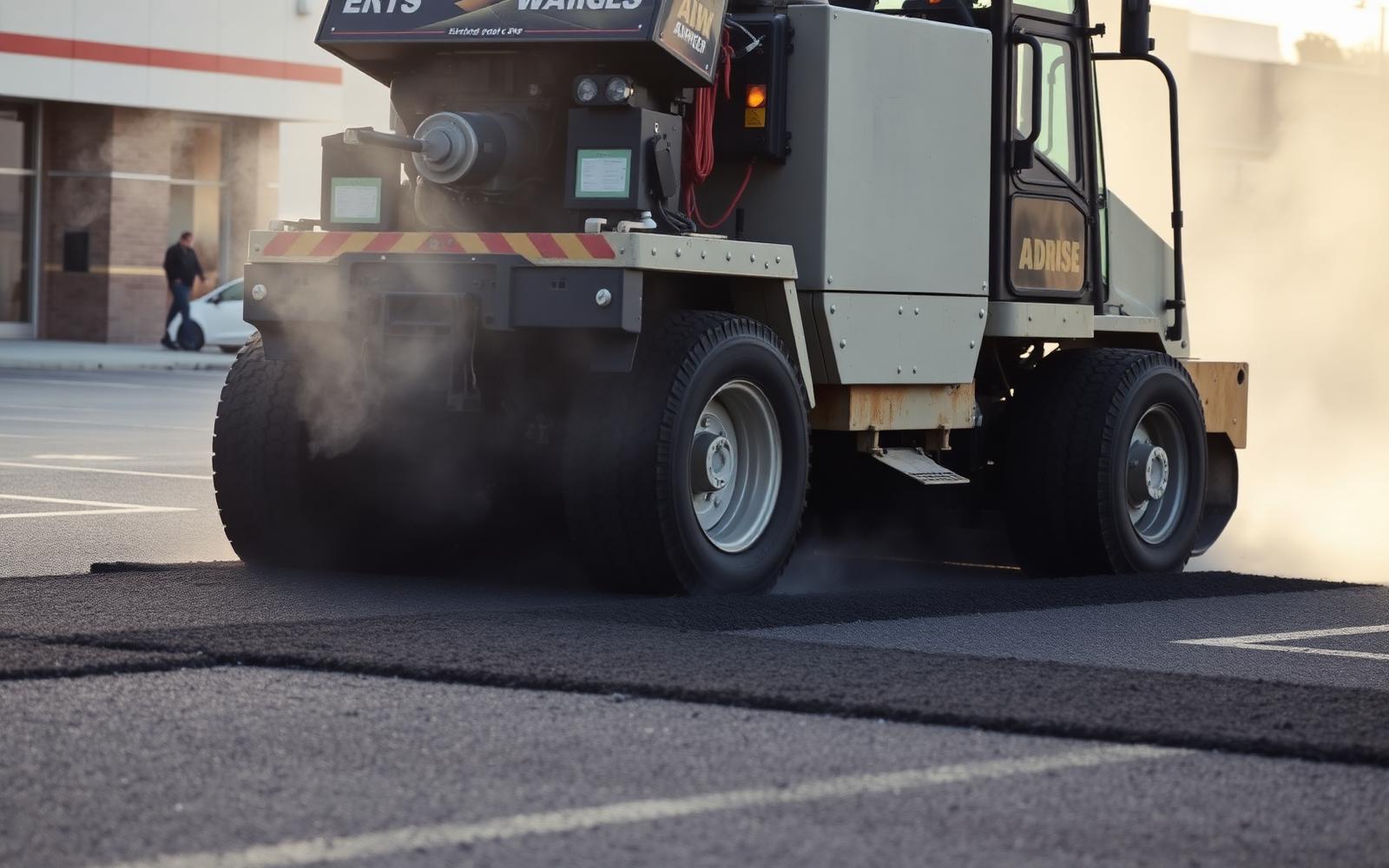
Asphalt looks simple from the curb: a truck dumps black material, a machine spreads it, a roller flattens it. The part that decides whether the surface lasts five years or twenty happens before any asphalt shows up.
1. Excavation and grading
The area is stripped of vegetation and soft soil and cut to the depth the finished section requires. Grade is set so water runs off the surface instead of standing on it — the single biggest cause of premature failure.
2. Sub-base and aggregate base
Crushed stone is placed in lifts and compacted. This layer, not the asphalt, carries the load. Residential driveways typically need several inches of compacted base; commercial lots carrying trucks need more.
3. Placing hot-mix asphalt
Hot-mix arrives at temperature and is placed with a paver in a continuous pass. Temperature matters: material that cools too much before rolling never reaches proper density, and low-density asphalt ravels and cracks early.
4. Compaction and joints
Rollers compact the mat while it is still hot. Joints between passes and around edges get extra attention because that is where water finds its way in first.
5. Cure time
New asphalt can be driven on within a day or two but stays soft for several weeks. Avoid parking in one spot, turning wheels while stopped, and setting jack stands or trailer jacks directly on the surface during that period.